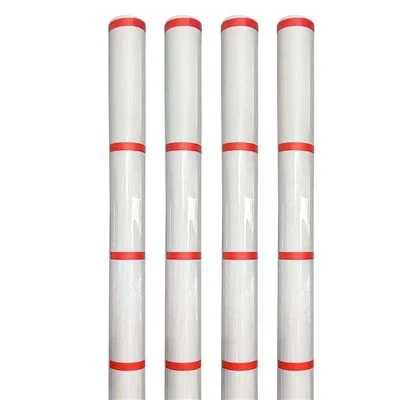
The development history of window film is inseparable from the development history of its raw materials and processing equipment, especially the development history of vacuum evaporation coating technology.
The United States began developing window film (tinted paper) based on polyethylene in the 1960s. At that time, most buildings used ordinary float glass, and the energy consumption caused by windows and doors accounted for more than one-third of the total energy consumption of buildings. When film materials used in aerospace were applied to building windows and doors, it was discovered that they could significantly improve the thermal insulation and energy-saving characteristics of buildings. Therefore, major companies began to research window film. 3M issued the first patent for solar heat insulation film in 1966. The global energy crisis of 1970 accelerated the development of window film. Vacuum evaporation coating technology was applied to PET base film, which greatly advanced window film technology.
In 1977, Deposition Technology, Inc. (acquired by the Belgian Bekaert Group in 1991 to form Bekaert Specialty Coatings) introduced advanced magnetron sputtering technology used by the U.S. Air Force and NASA to the window film industry. In the early 1980s, it became the world's first manufacturer to use magnetron sputtering to produce window film. Compared to the vacuum evaporation coating process used by other window film manufacturers, its biggest advantage was the ability to create transparent, heat-insulating alloy layers from metals such as stainless steel, titanium, nickel, gold, silver, and copper. This significantly improved the window film's heat insulation while maintaining high visual clarity, solving the problems of high reflectivity and easy fading associated with dyed and vacuum evaporation coating processes. In 1985, the company produced a 1540mm wide magnetron sputtered window film.
American-based Scitech Industries primarily develops and produces spectrally selective thin films for military and space technology applications. In the mid-1980s, the company transferred its XIR patented technology, originally developed for use in thin-film components for spacecraft, to civilian applications, initiating the commercial production of high-performance glass window films. XIR allows for high transmittance of visible light from sunlight while selectively blocking almost all infrared and ultraviolet radiation, establishing a leading position in the field of thin film and materials technology.
Israel's Hanita Corporation began producing safety films in the 1990s. Originally developed for military applications by Jewish scientists at NASA, these films were designed to protect personnel and property from bullets and explosives during wartime, mitigating damage and loss to military equipment and facilities. With the easing of international tensions, these military-purpose protective films gradually transitioned to commercial civilian products, playing a significant role in safety protection for all types of glass, particularly in applications such as building curtain walls, energy conservation and insulation, and flame protection, providing ideal materials. Hanita has transferred this safety film production technology worldwide, including to the United States and Japan, through technology transfer.
In the 21st century, window film manufacturers achieved technological breakthroughs, resulting in films with unique high visible light transmittance and high thermal control properties that repel heat. They treated conventional window films as a layered process, bonding and stacking films with different functions layer by layer. This allowed them to improve the glass's impact resistance by over a hundred times while maintaining higher light transmittance, heat insulation, and UV protection. In recent years, especially after the 9/11 attacks in the United States, window film has become an increasingly popular building material for building doors, windows, partitions, ceilings, and security in the banking industry.
Currently, the world's leading window film manufacturers are mainly located in the United States, Israel, and India. Other mid-to-low-end window film manufacturers are located in countries and regions such as South Korea, Taiwan, and mainland China.